Campsite near Fontaine-de-Vaucluse: the source of the Sorgue about 10 minutes away
Farm campsite · Lagnes, Vaucluse
Around the campsite
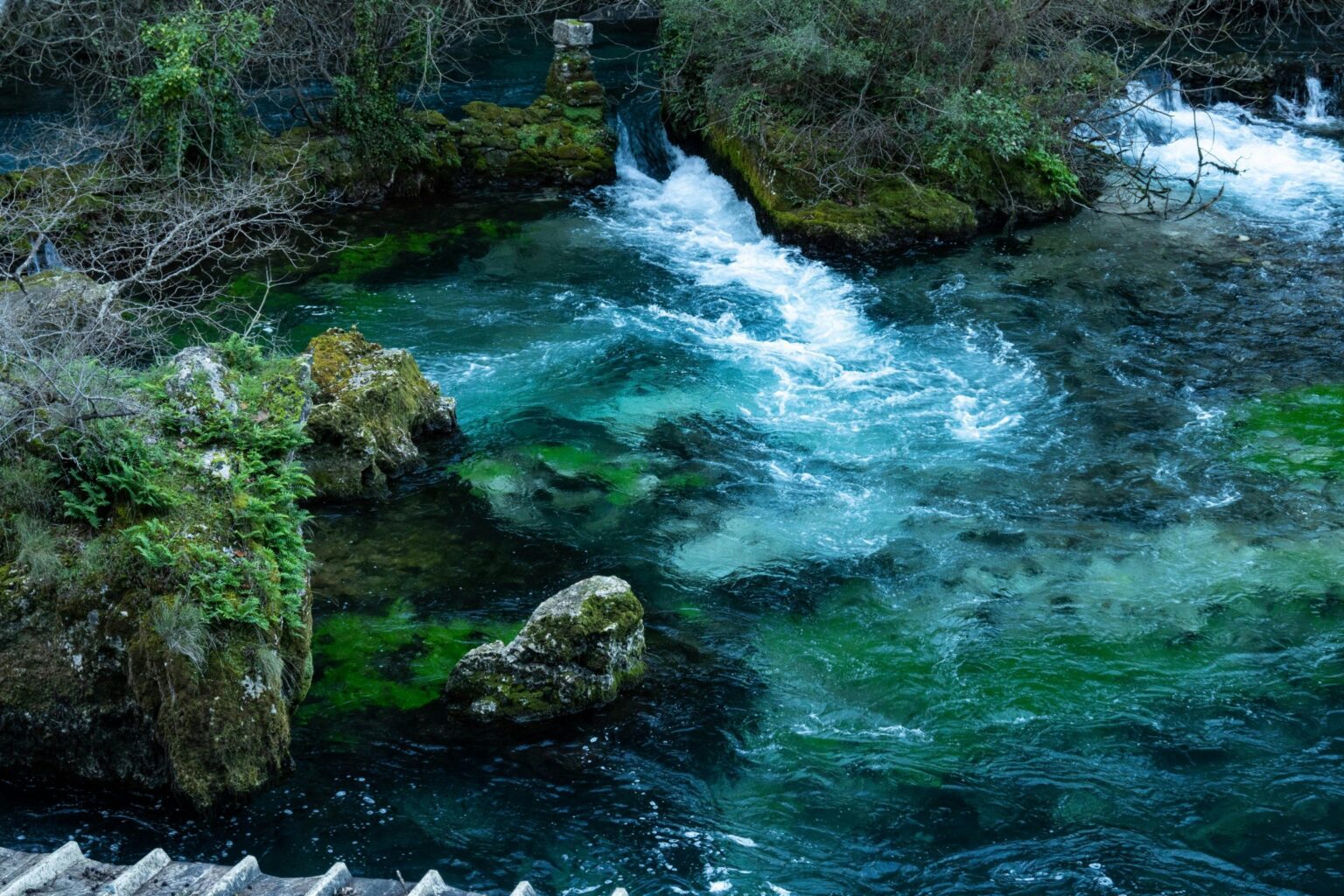
Fontaine-de-Vaucluse, the village built around the source of the Sorgue, is about 7 km from the farm, roughly a ten-minute drive. L’Aire Naturelle de la Folie is in Lagnes, a neighbouring commune, deep in the countryside. This page brings together everything you need to prepare for a visit to the spring, Petrarch’s village and the paper mill.
From the campsite: about 7 km, approximately 10 minutes by car
Indicative time, excluding heavy traffic and parking.
A closed valley, a river born from a chasm
The ancient name of the place, Vallis Clausa, means “closed valley”: the village is built at the end of a cul-de-sac, at the foot of a cliff that towers more than 200 metres above the houses. This is where the Sorgue emerges, after a long underground journey through the limestone of the Vaucluse mountains.
The spring is the point where the water, after a long underground journey, bursts into the open air, with an annual flow of 630 to 700 million m³. The chasm has been explored to a depth of more than 300 metres. The flow varies greatly: around 6 m³ per second at the end of summer 2009, rising to 90 m³ per second during a flood. The Luberon guide recommends spring to see the water gush out with the greatest force.
The path to the spring
A path follows the Sorgue from the village to the chasm. It passes medieval remains, places associated with Petrarch and traces of the industrial past linked to water. Access conditions on the day should be checked on site or with the tourist office.
In Petrarch’s footsteps
The Italian poet Petrarch stayed in Vaucluse from 1339 and left in March 1353. The library museum named after him is also dedicated to René Char, the poet whom the history of the Folie farm counts among its former visitors. Here you can see old editions, manuscripts and modern works of art, and the visit ends with the “treasure of the waters”, ancient coins discovered in the chasm.
Pétrarque’s garden, beside the Sorgue, offers a view of the remains of the château of the bishops of Cavaillon. A column erected in 1804 commemorates the 500th anniversary of the poet’s birth.
The Vallis Clausa paper mill
A few metres downstream from the spring, this mill makes rag paper using traditional techniques. A paper mill was already operating in the village in the 15th century, and paper mills provided a livelihood for the area until 1950. According to the tourist office, admission to the mill is free and unrestricted and follows a gallery where handmade paper is sold; a hands-on visit also allows visitors to make their own sheet with a papermaker. Opening hours vary according to the season.
The village’s museums and monuments
To complete the visit, or for a rainy day, the village brings together several sites:
- the Jean Garcin Museum of History, devoted to life under the Occupation and the Resistance in Vaucluse
- the Museum of the Underground World, Norbert Casteret collection
- the santon ecomuseum
- the Church of Notre-Dame-et-Saint-Véran, listed as a historic monument since 1840
Staying at Aire Naturelle de la Folie
Return to the farm, beside the stream
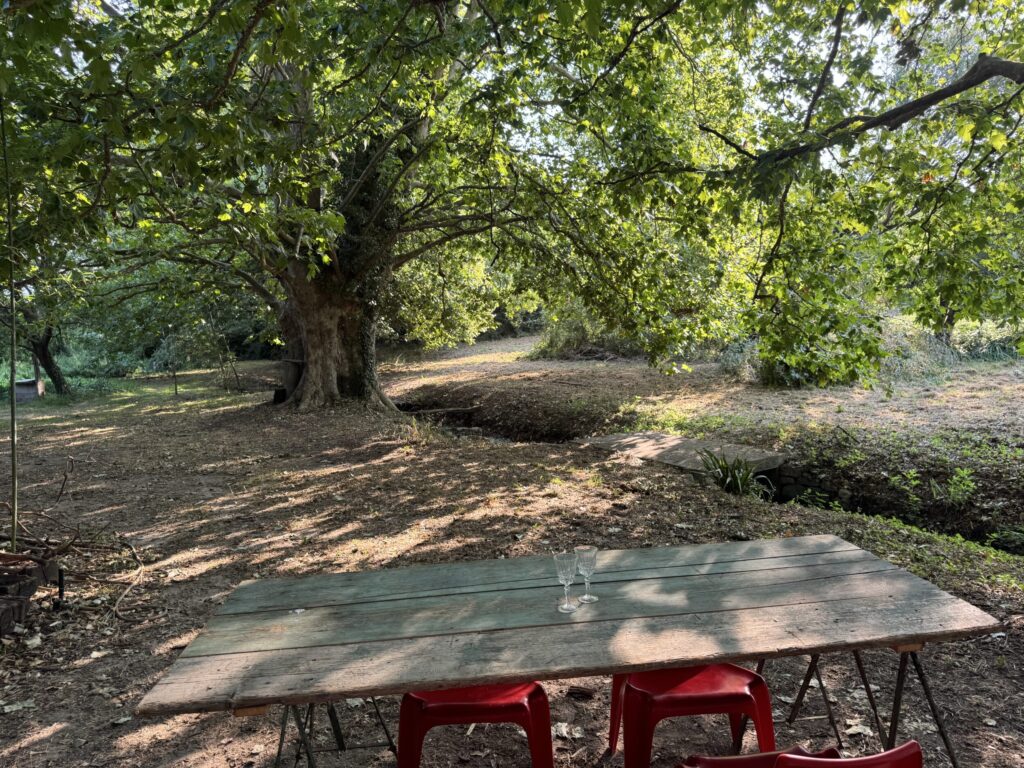
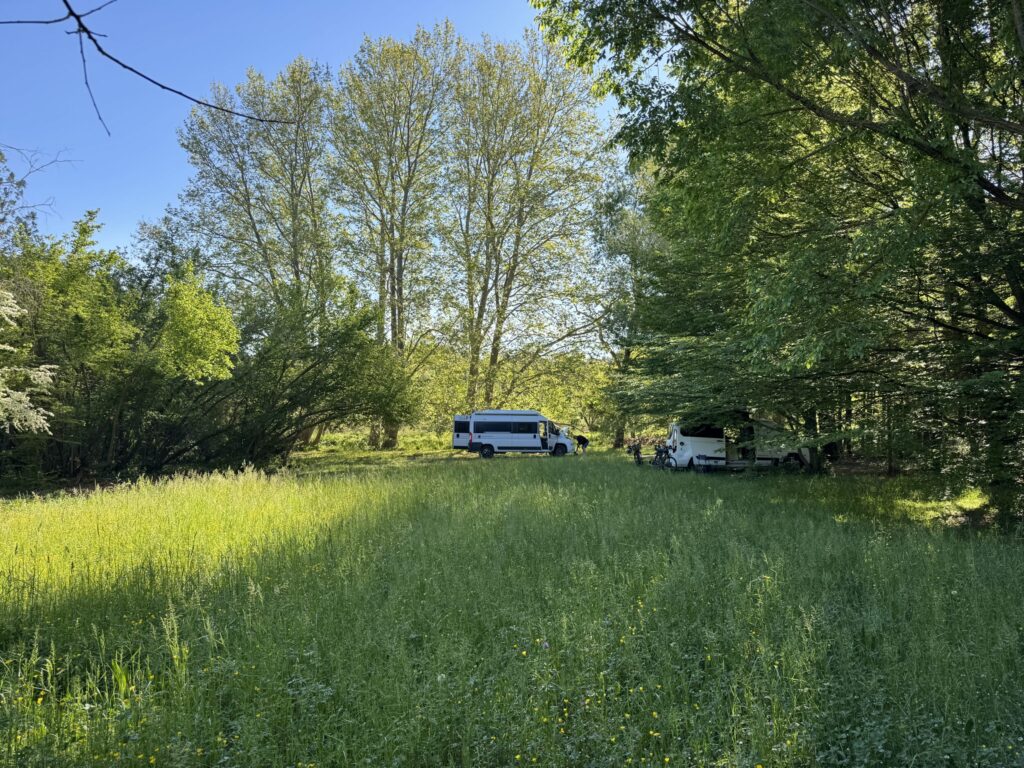
After the spring and the village, the Belle Tente awaits beneath a century-old plane tree, beside the stream: the site evokes the song of the water and insects that accompanies the evening. The pitches, few in number and shaded, are designed for peace and quiet, and the nature cabin accommodates two people. To book, visit the official website directly.
Frequently asked questions
How far is the campsite from Fontaine-de-Vaucluse?
Approximately 7 km: about a ten-minute drive to the Chemin de la Fontaine, near the spring.
What is the best time to see the spring?
The Luberon guide recommends spring, when the water gushes forth with the greatest force. The flow varies according to rainfall: check before setting off.
Can the paper mill be visited free of charge?
According to the L’Isle-sur-la-Sorgue tourist office, the mill visit is free and unrestricted; a participatory visit is also offered. Opening hours vary according to the season.
Also worth seeing
Other stops around the campsite, with the distance from the farm.